30 Seconds Recipes
Ukrainian Borscht

Ukrainian Borscht

Classic beef-on-the-bone borscht: rich, ruby-red, right on the first try.

Scroll ↓
⏱ 2 h 30 min🍽 Serves 6Easy40 min hands-on ▶ Watch the Short

Ingredients

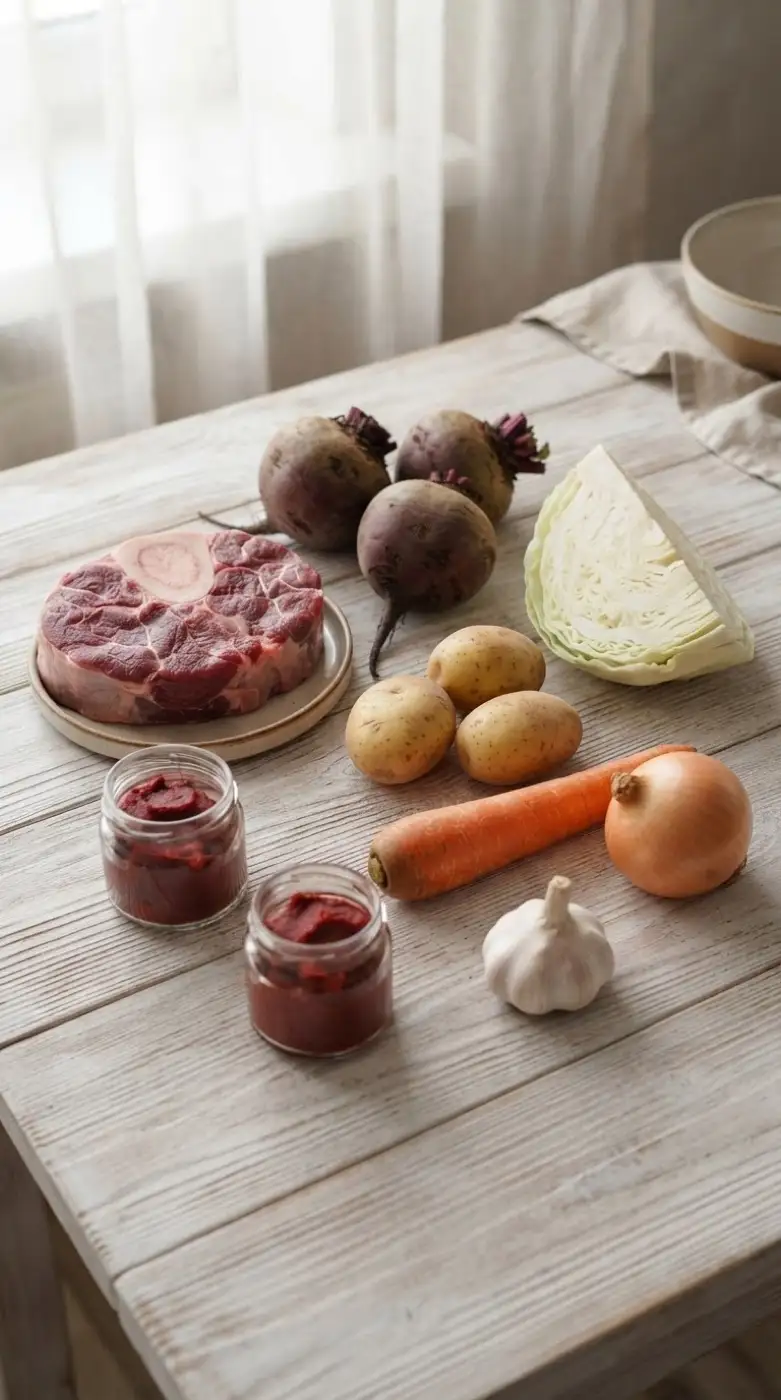
  • Beef shank on the bone600 g (1.3 lb)
  • Cold water2.5 L (10 cups)
  • Beetroot300 g (2 small)
  • White cabbage300 g
  • Potatoes3 (≈ 400 g)
  • Carrot1 (≈ 120 g)
  • Onion1 (≈ 120 g)
  • Tomato paste2 tbsp
  • Garlic3 cloves
  • Vinegar 5–9% or lemon juice1 tsp
  • Salt, black pepper, bay leafto taste
  • Sour cream and dillto serve

How to choose ingredients

Meat

Choose beef shank or brisket on the bone: bone and connective tissue give the broth body and a light, silky gelatin. The meat should be red, with no slime or sour smell, and the fat pale. Lean boneless cuts make a thin, empty broth.

Beetroot

Pick small (7–9 cm), heavy, firm roots with smooth skin and a clean cut top. Large, soft ones are fibrous and less sweet. Deep burgundy flesh without pale rings gives the best colour.

Cabbage and potatoes

Cabbage should be a dense, squeaky head without dark spots: young cabbage is juicy but cooks down fast, mature cabbage keeps its shape. Use all-purpose, medium-starch potatoes: they hold their shape and slightly thicken the soup.

Ukrainian Borscht — Ingredients

Cookware and heat

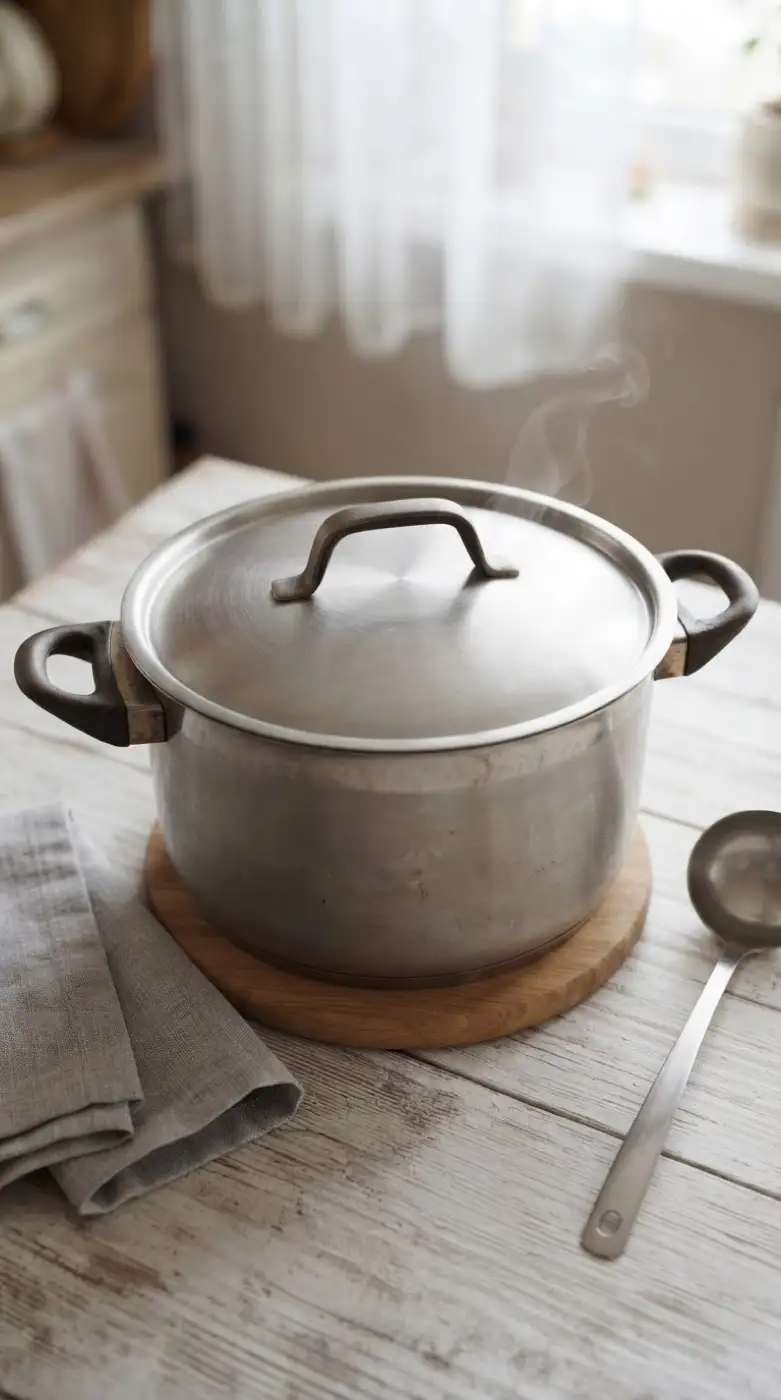
Pot. A 4–5 L heavy-bottomed pot with a lid. The thick base holds a steady gentle simmer and nothing scorches.

Skillet. A deep 26–28 cm skillet (cast iron or non-stick) for the sauté: a wide surface fries the vegetables instead of steaming them.

InductionBroth: power 7–8 of 9 until boiling, then 2 of 9 (≈ 300–400 W) for a lazy simmer. Sauté: 5–6 of 9 (≈ 1200–1500 W); the oil shimmers but does not smoke.
GasBroth: after it boils, the lowest flame, with bubbles rising only now and then. Sauté: medium flame, with flames not licking the sides of the pan.
ElectricBroth: full power until boiling, then 1–2 of 6. Sauté: 4–5 of 6. The coil cools slowly, so turn it down early.

Dials differ between cookers, so follow the visual cue given under each step.

Prep and cuts

Beetroot: matchsticks

Peel, slice into 0.5 cm planks, then into matchsticks.

Size5 × 0.5 × 0.5 cm
Why it mattersThin matchsticks soften in 10 minutes and release colour. Chunky pieces stay hard, and grated beet turns to mush.

Cabbage: fine shred

Quarter the head, cut out the core, shred with a sharp knife.

Sizestrips 3–4 mm wide
Why it mattersThin cabbage cooks in 15 minutes and turns tender without taking over the soup.

Potatoes: cubes

Cut evenly and keep in cold water until needed.

Size1.5–2 cm cubes
Why it mattersEqual size means equal doneness. Tiny cubes fall apart and cloud the broth.

Onion and carrot

Dice the onion finely and cut the carrot into matchsticks like the beet.

Sizeonion: 0.5 cm dice; carrot: 4 × 0.4 cm matchsticks
Why it mattersFine onion melts into the flavour, while carrot keeps its shape and sweetness.

Step by step

Broth
⏱ 1 h 30 min

01Broth

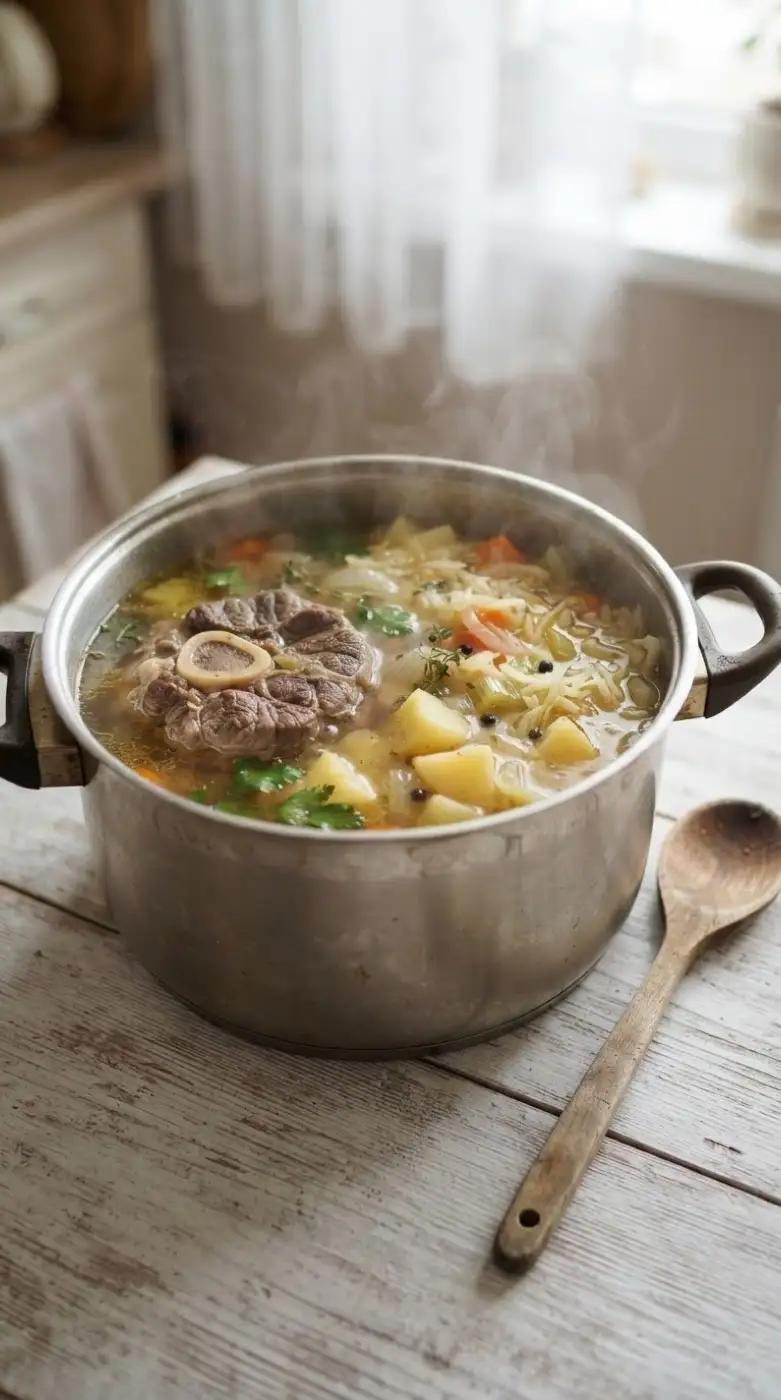
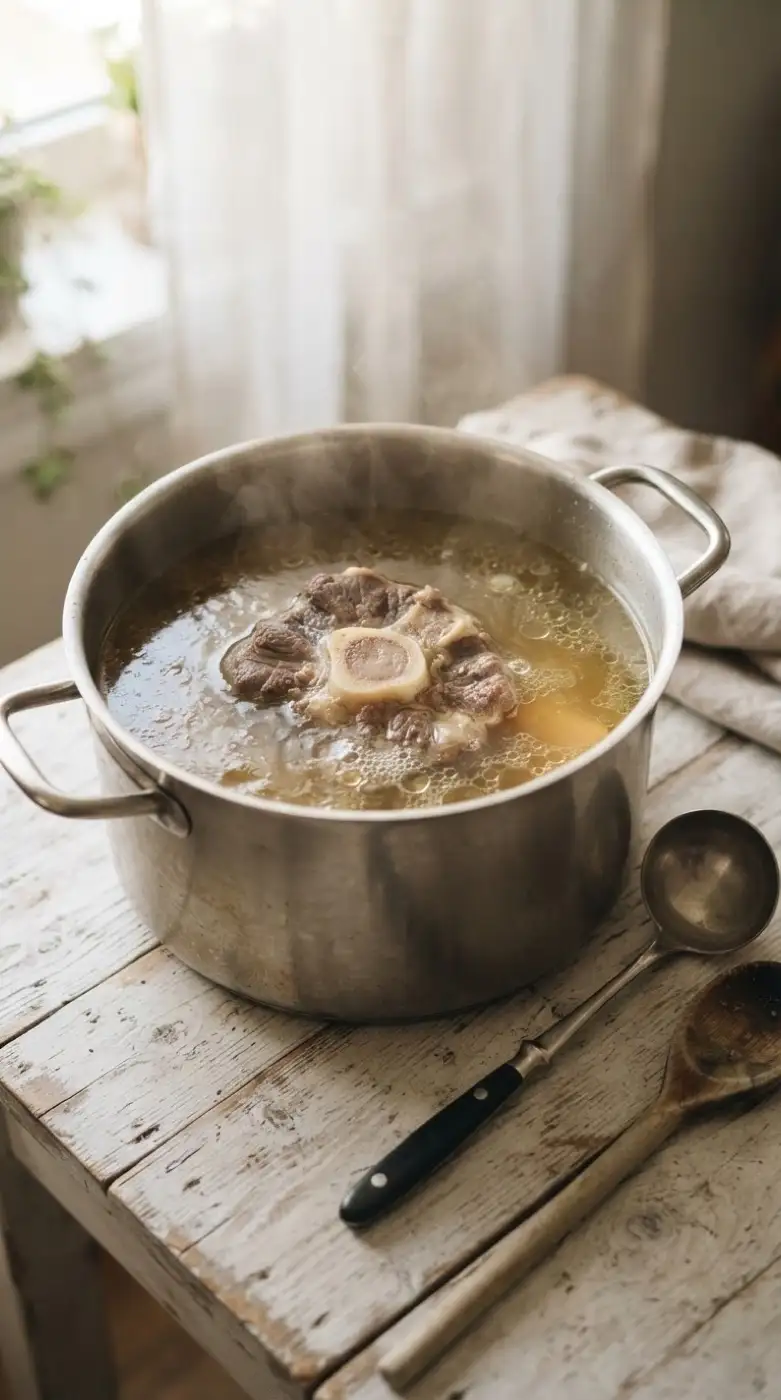
Put the meat in the pot, cover with 2.5 L cold water and bring to a boil. When grey foam rises, skim it off. Reduce to the lowest heat, add the bay leaf and 1 tsp salt.

HeatStart with cold water, then the lowest heat after it boils, lid ajar.
How to tell it is doneThe broth is clear with only occasional bubbles. The meat slides off the bone and a fork goes in without effort.
Common mistakeA hard boil clouds the broth and toughens the meat. Cold water at the start lets the proteins rise as foam instead of staying in the meat.
Beet sauté
⏱ 10 min

02Beet sauté

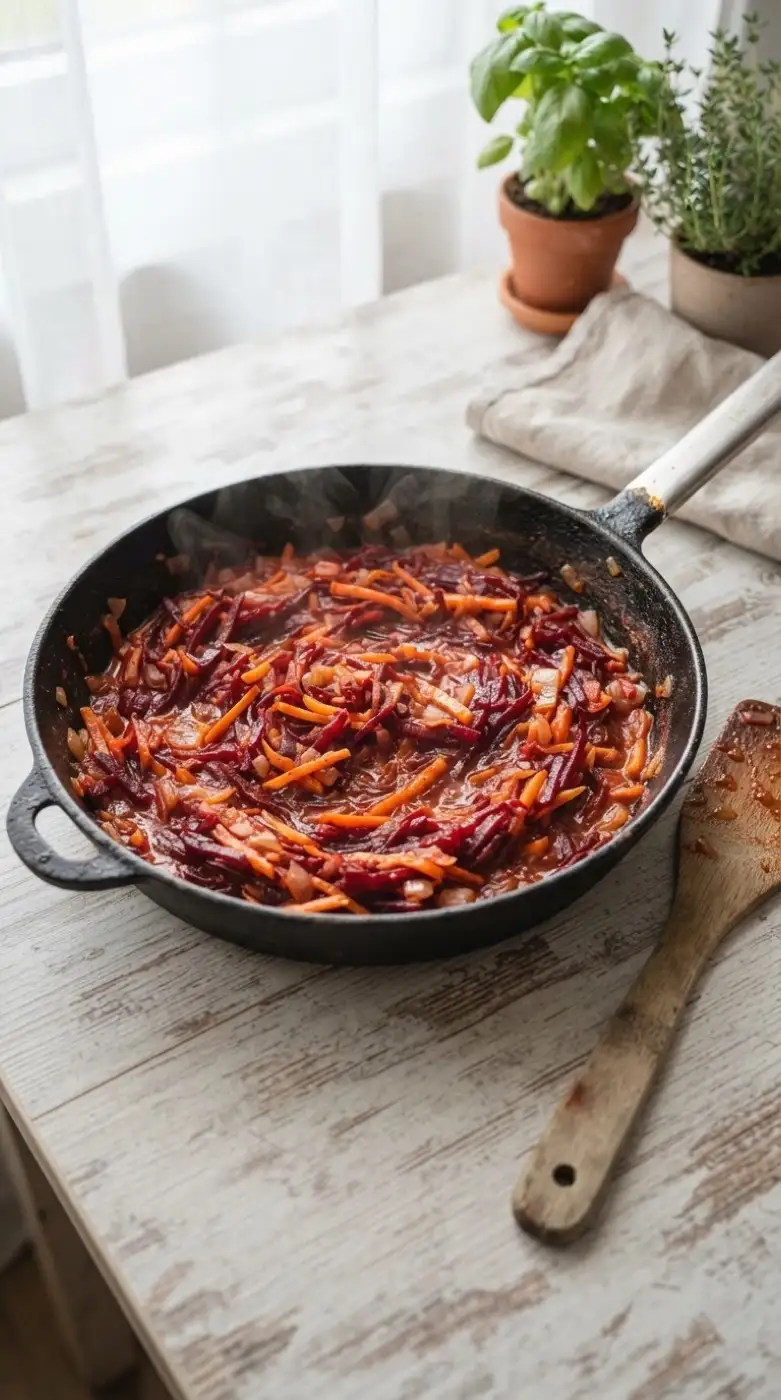
Heat 2 tbsp sunflower oil in the skillet. Fry the onion for 2 minutes, add the carrot and fry 3 more minutes. Add the beetroot, 1 tsp vinegar and the tomato paste, and stir. Cover and cook for 5 minutes, stirring.

HeatInduction 5–6 of 9; the oil shimmers but does not smoke.
How to tell it is doneVegetables are soft but not mushy, the colour is bright red, and the smell is sweet with no bitterness.
Common mistakeHeat too high: the beet darkens and turns bitter. Without acid (vinegar or lemon) the beet goes dull brown.
Potatoes and cabbage
⏱ 15 min

03Potatoes and cabbage

Take the meat out and pull it off the bone into pieces. Add the potatoes to the broth and cook for 8 minutes, then add the cabbage and cook 7 more.

HeatA gentle boil: steady bubbles, no rolling.
How to tell it is donePotatoes are soft but intact; cabbage is translucent with a slight bite.
Common mistakeAdding cabbage before the potatoes: it overcooks and loses its flavour.
Combine
⏱ 10 min

04Combine

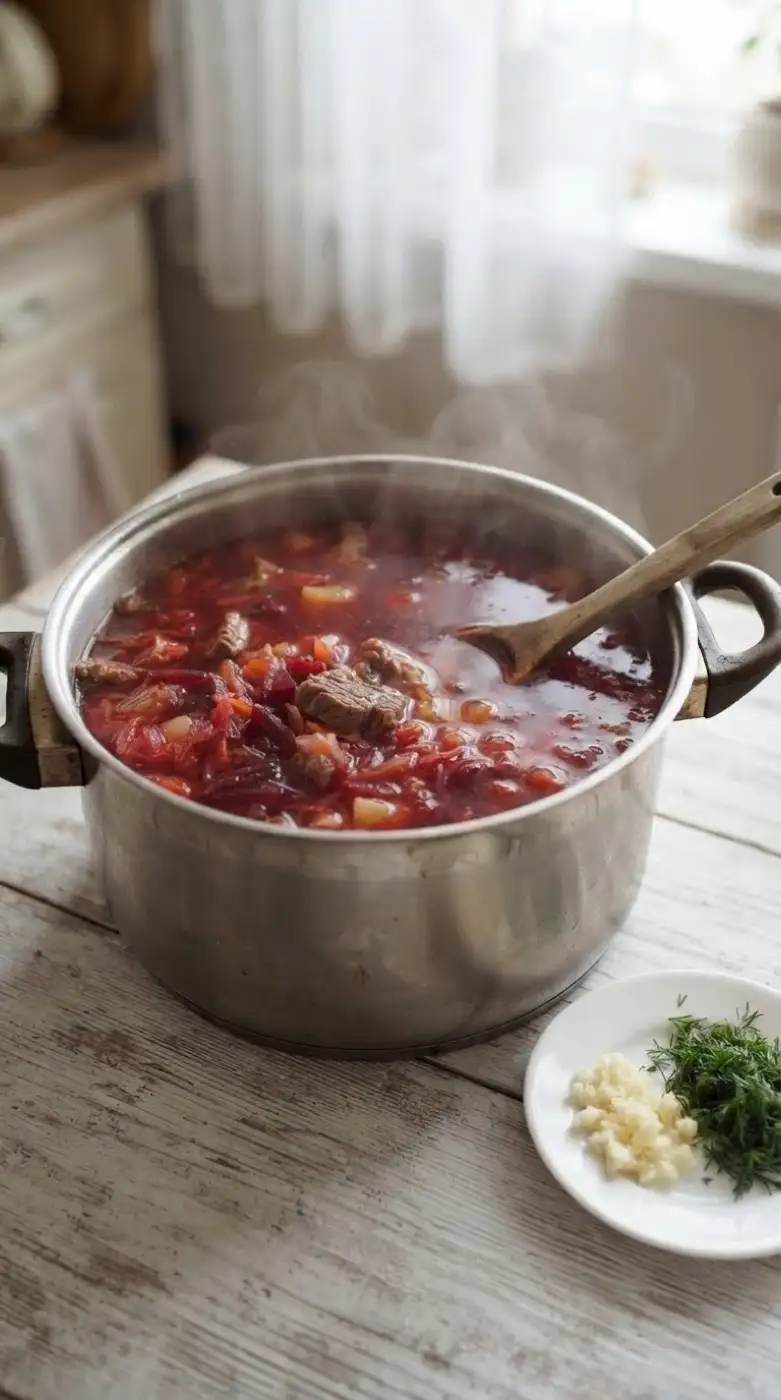
Stir the sauté into the pot and return the meat. Add the crushed garlic, salt and black pepper to taste. Simmer 10 minutes.

HeatGentle simmer.
How to tell it is doneA deep burgundy soup with an even smell of beet and garlic.
Common mistakeBoiling hard after the sauté goes in: the colour fades and the beet turns bitter.
Rest
⏱ 20 min

05Rest

Take the pot off the heat, cover and leave for 20 minutes. Taste and adjust the salt.

HeatHeat off, lid on.
How to tell it is doneThe flavour is deeper and rounder, and the sharpness of the garlic has gone.
Common mistakeServing straight off the heat: the flavours haven't come together yet.

Serving

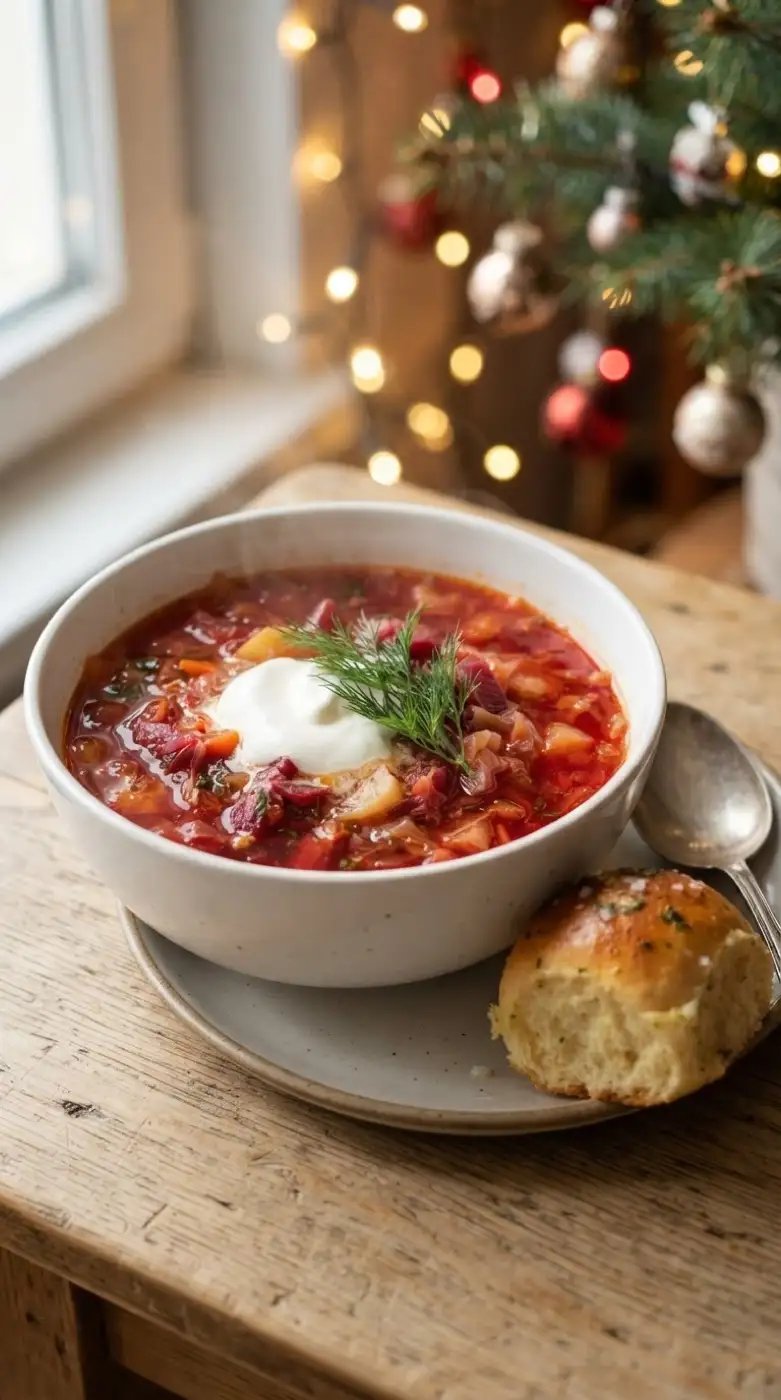
Ladle hot into bowls and top with a spoonful of sour cream and dill. Classic partners: garlic pampushky or a slice of rye bread.

Ukrainian Borscht

Storage

Cool within 2 hours and refrigerate in a covered container for up to 3–4 days. Reheat until boiling. Borscht freezes well for up to 3 months, best without the sour cream.